Nature & Animals
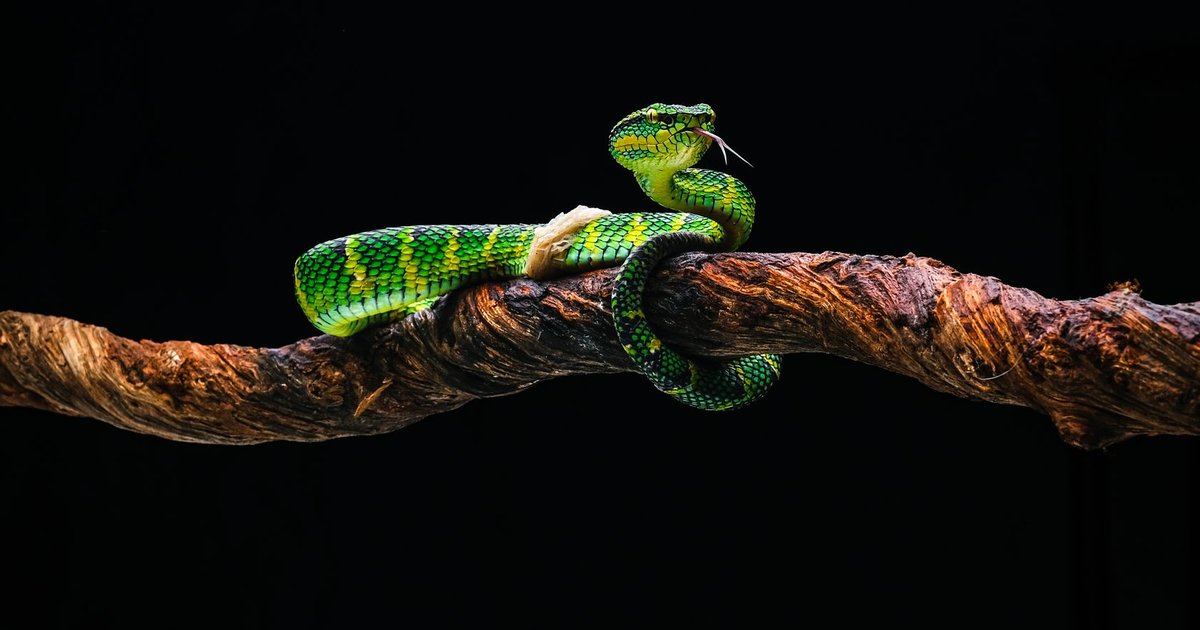
The Snake That Hunts in Complete Darkness
A pit viper doesn't need eyes to hunt. In absolute darkness—the kind where you can't see your own hand—a rattlesnake, copperhead, or cottonmouth can strike a mouse with perfect accuracy.
The organs that make this possible are two small pits, one on each side of the snake's face between the nostril and the eye. These aren't eyes. They're thermal cameras that detect infrared radiation—heat—with such sensitivity they can perceive a temperature difference of a fraction of a degree.
Watch a pit viper hunt and you're watching something most predators can't do: the snake maps its world in heat signatures alone. A warm-blooded rodent moving through dead leaves registers as a bright, clear target against the cooler background. The snake doesn't guess. It doesn't search. It aims and strikes with the same precision it would use in daylight.
The pit organ works by sending signals directly to the brain's trigeminal nerve—the same nerve responsible for facial sensation in humans. The brain stitches together a composite image from both pits, creating something like stereo vision, but for heat instead of light. This gives the snake distance judgment accurate enough to calculate the exact angle and speed needed to hit a moving target in zero visibility.
Not all snakes have this ability. Only pit vipers do—the family that includes most venomous snakes in North America and Asia. It's a evolutionary advantage so profound that some pit vipers have actually lost their ability to see well over millions of years. Why maintain expensive eye tissue when heat vision handles everything?
A mouse scrambling through the dark thinks it's hidden. To a pit viper, it's already dead—just hasn't stopped moving yet.
More from Nature & Animals