Nature & Animals
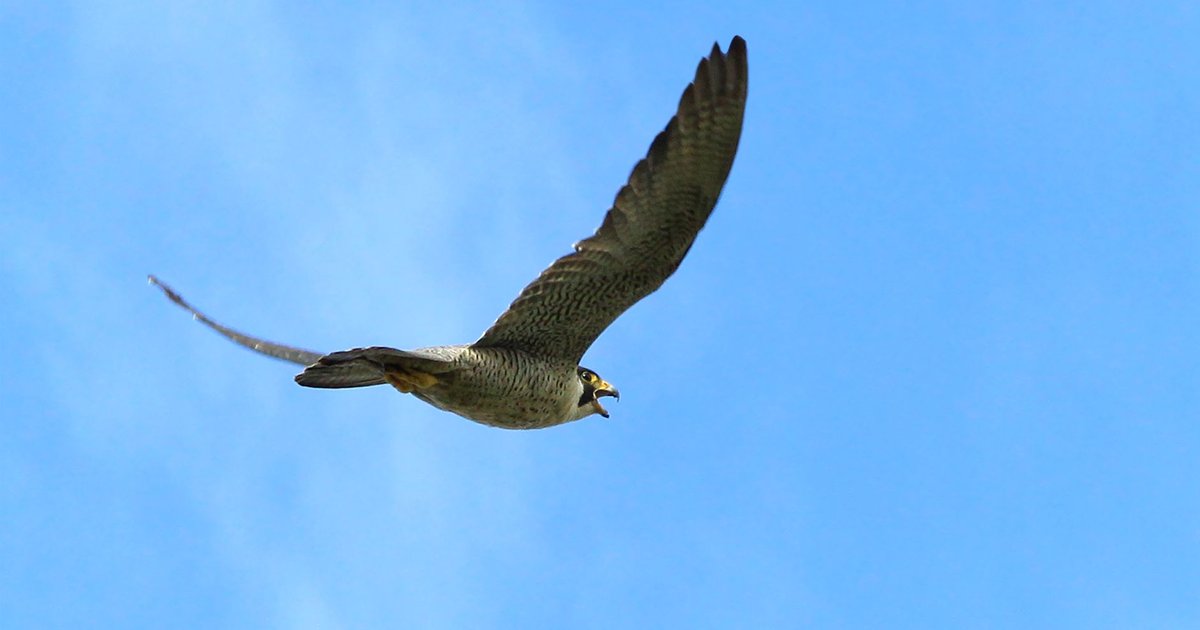
The Peregrine Falcon's Unmatched Dive Speed
A peregrine falcon folds its wings and drops from the sky. In seconds, it's moving faster than a Formula 1 race car, faster than a bullet train, faster than anything else alive.
The top speed: 240 miles per hour, possibly higher. No other animal comes close. A golden eagle in a dive manages around 150 mph. A greyhound at full sprint hits 45. Even the sailfish, the ocean's speed record holder, maxes out at 68 mph.
That velocity matters because the falcon is hunting. Mid-air. It spots a pigeon or a duck thousands of feet below, and instead of chasing it straight, the falcon climbs higher first—sometimes to 3,000 feet or more. Then it tips into a stoop, wings nearly tucked, and accelerates. The prey doesn't see it coming until it's too late.
The physics demands adaptation. At 240 mph, air pressure alone would collapse a normal bird's lungs. Peregrine falcons have a special valve in their nostrils that slows the airflow, protecting their respiratory system. Their eyes are built to track movement at that speed; most birds' eyes would blur. Their talons are needle-sharp and oversized, built to punch through feathers and bone in a fraction of a second.
For decades, peregrine populations crashed. Pesticides accumulated in their bodies, making eggshells too thin to survive incubation. By 1970, only a handful nested in the eastern United States. Captive-breeding programs reversed the collapse, and today the bird is off the endangered list.
Watch a peregrine falcon hunt and you're seeing the most lethal predator strategy evolution produced—not through strength, not through endurance, but through pure, weaponized speed.
More from Nature & Animals