Nature & Animals
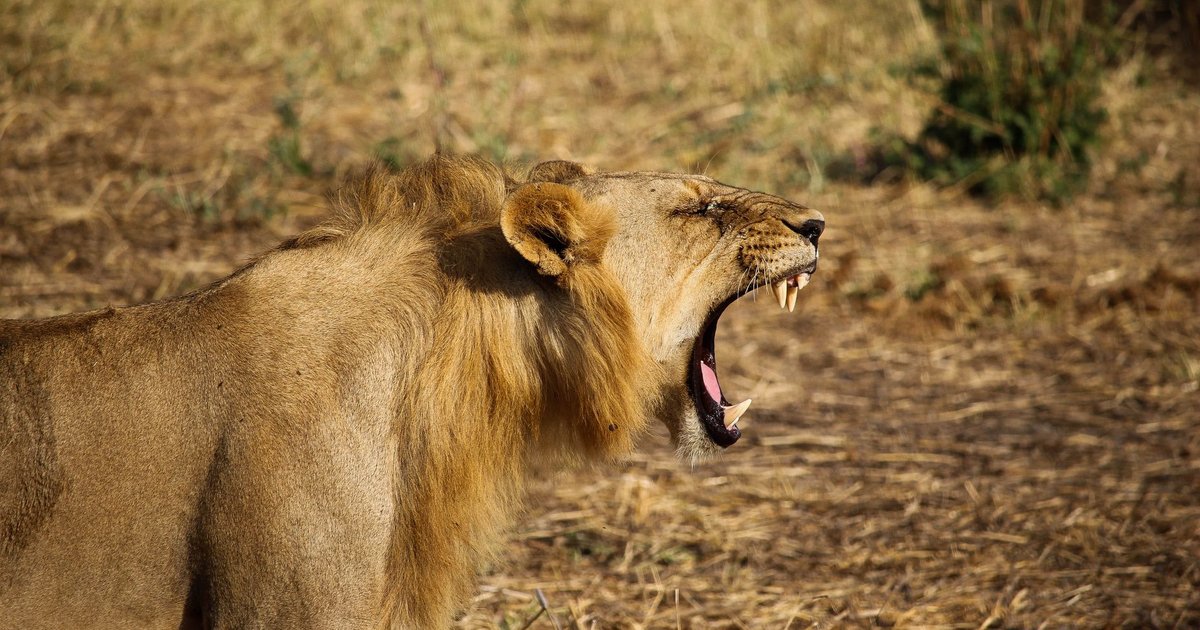
A Lion's Roar Travels Five Miles Through the Dark
A male lion's roar reaches 114 decibels. That's louder than a chainsaw, louder than a rock concert, loud enough to cause hearing damage if you're standing twenty feet away. But the real shock isn't the volume—it's the distance. That roar carries five miles across open savanna, which means a lion can announce its presence to rivals and mates without ever leaving its territory to be seen.
Why so loud? A male lion's massive body helps. An adult male weighs up to 570 pounds, and larger bodies naturally produce lower frequencies that travel farther through air. Those low frequencies don't fade the way higher-pitched sounds do; they bend around obstacles, slip through brush, carry across valleys. A lion isn't just screaming—it's weaponizing physics.
There's a second trick: lions roar at dawn and dusk, when the air is cooler and denser. Sound travels faster and farther through cool air than hot. It's not conscious strategy, exactly, but it works. A dawn roar reaches farther than a midday one would.
Here's what makes it stranger: a lion roars as much to avoid a fight as to start one. That five-mile advertisement means other males know exactly where this lion is and how serious it sounds. Most of the time, that's enough. The rival gets the message and stays away. Violence averted by sheer acoustic projection.
But a roar isn't just threat. Females use it differently—shorter, less resonant, more conversational. A pride roars together sometimes, which can reach 125 decibels, a wall of sound that travels even farther. By then you're not looking at a warning anymore. You're looking at a coalition announcing dominance over miles of land. That's power made audible.
More from Nature & Animals