Nature & Animals
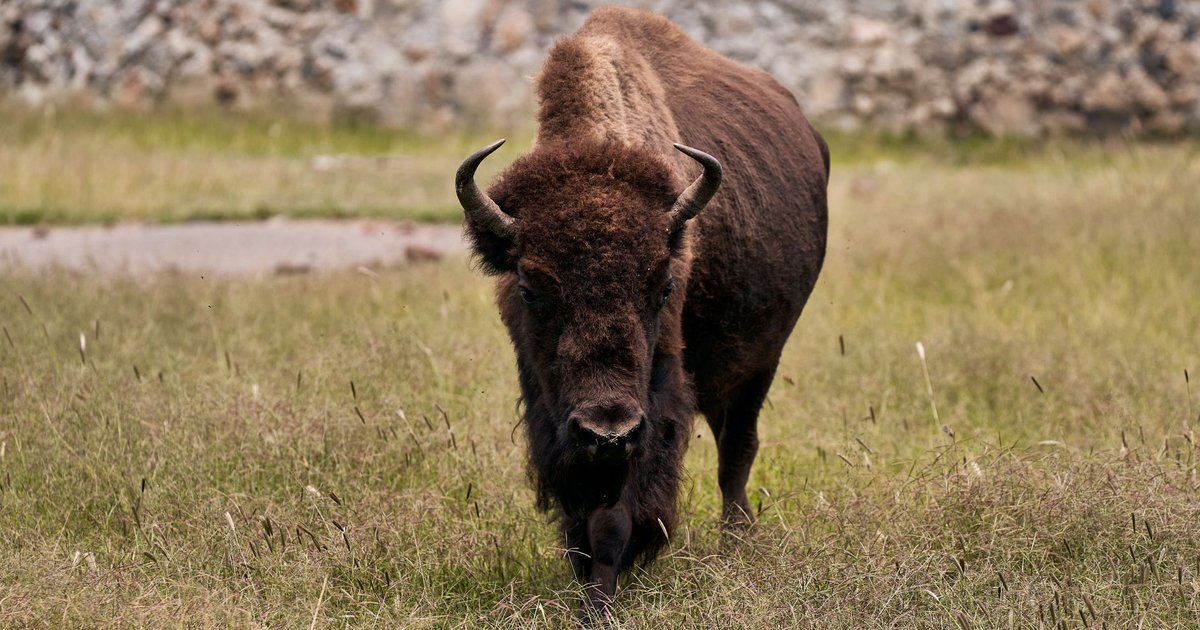
The Animal That Can Clear a Fence Backwards
A bison can jump straight up six feet. Not across a field. Straight up, all vertical. For an animal that weighs between 900 and 2,000 pounds depending on sex and age, this is approximately the equivalent of you launching yourself over a two-story building.
They can also run 35 miles per hour, which means a charging bison reaches your car's highway speed faster than you can react. The kicker: they can reverse at nearly the same velocity. There's a reason ranchers and wildlife handlers don't corner them. A cornered bison doesn't panic in the usual sense—it just explodes sideways or backward with the precision of something far smaller.
This combination of power and mobility evolved across millennia on the Great Plains, where open ground offered no shelter and predators were relentless. A bison calf born in spring would need to outrun wolves within weeks. An adult needed the ability to pivot instantly if a threat appeared, or to break through obstacles in a way that no predator could anticipate. The vertical leap probably evolved for crossing arroyos and rocky terrain, the speed for those flat-ground escapes, and the reversing for when a canyon wall or dense cottonwood grove blocked forward movement.
Today, fewer than 400,000 bison survive in North America—down from 30 to 60 million before European settlement. Most live in protected herds and ranches. But those genetic instructions for explosive movement remain intact in every individual. Watch a bison at a wildlife refuge suddenly bolt, and you're seeing the same animal that once scattered across half a continent, moving with a kind of casual invulnerability that larger predators learned not to test. The jump, the speed, the impossible backward sprint—they're not tricks. They're the shape of survival written into muscle.
More from Nature & Animals