Nature & Animals
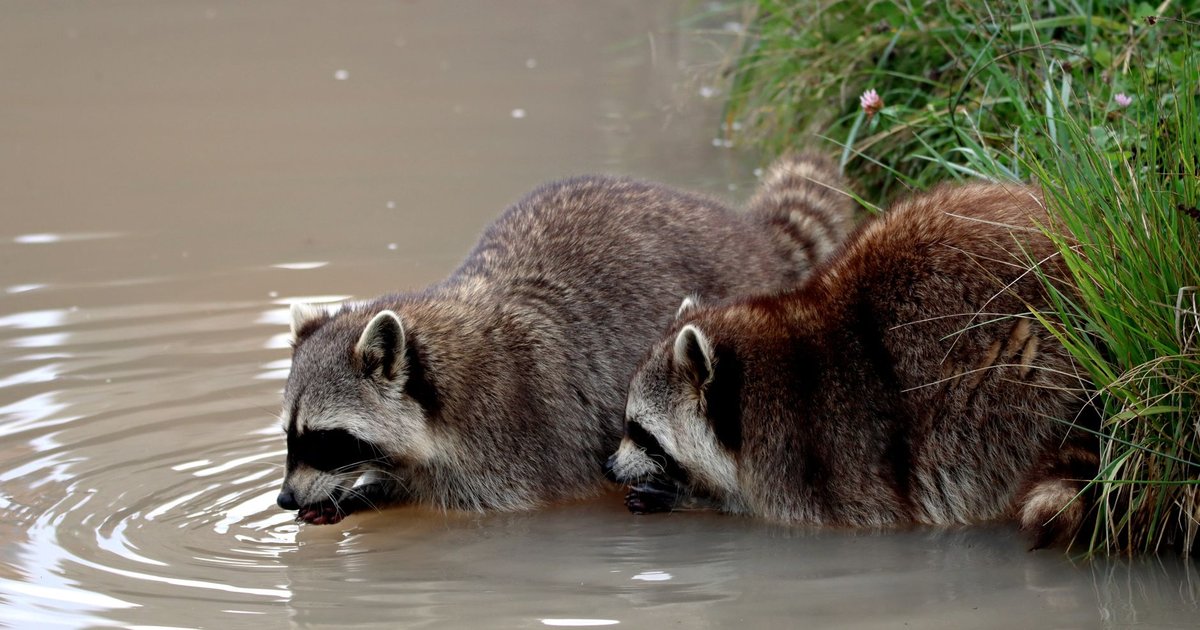
The Raccoon's Trick Nobody Expected to Work
A raccoon can feel the difference between two coins in complete darkness. Put a nickel and a dime in its paws and it won't need to look—the nerve endings in its front feet are sensitive enough to distinguish them by touch alone.
This isn't party trivia. It's the foundation of why raccoons are so good at the thing they're famous for: opening things they shouldn't. Garbage cans, coolers, puzzle feeders, latched gates. Watch a raccoon work a latch and you're watching pure tactile problem-solving in real time. The animal feels its way through obstacles the way a blind person reads Braille.
Their paws have more sensory receptors per square inch than almost any other mammal of their size. A human hand has roughly 2,500 nerve receptors across the whole palm. A raccoon's front foot—smaller by far—is packed with something closer to that density concentrated in a smaller space. The neurons in their paws actually bypass normal processing and report directly to the brain, giving raccoons feedback that's nearly instantaneous.
This matters because it means raccoons aren't trying things at random. They're reading the world through their fingers the way you read a text message on a phone you can't see. A study at Universität Kassel found that raccoons could distinguish between similar objects underwater using touch alone—something most mammals couldn't do.
We spent decades assuming raccoons were just vandals with lucky paws. Turned out we were watching intelligence in a form we weren't built to recognize. The garbage can raids, the puzzle-feeder breaks, the mysterious ability to undo just about anything: not accident. Archaeology written in nerve endings.
More from Nature & Animals