Nature & Animals
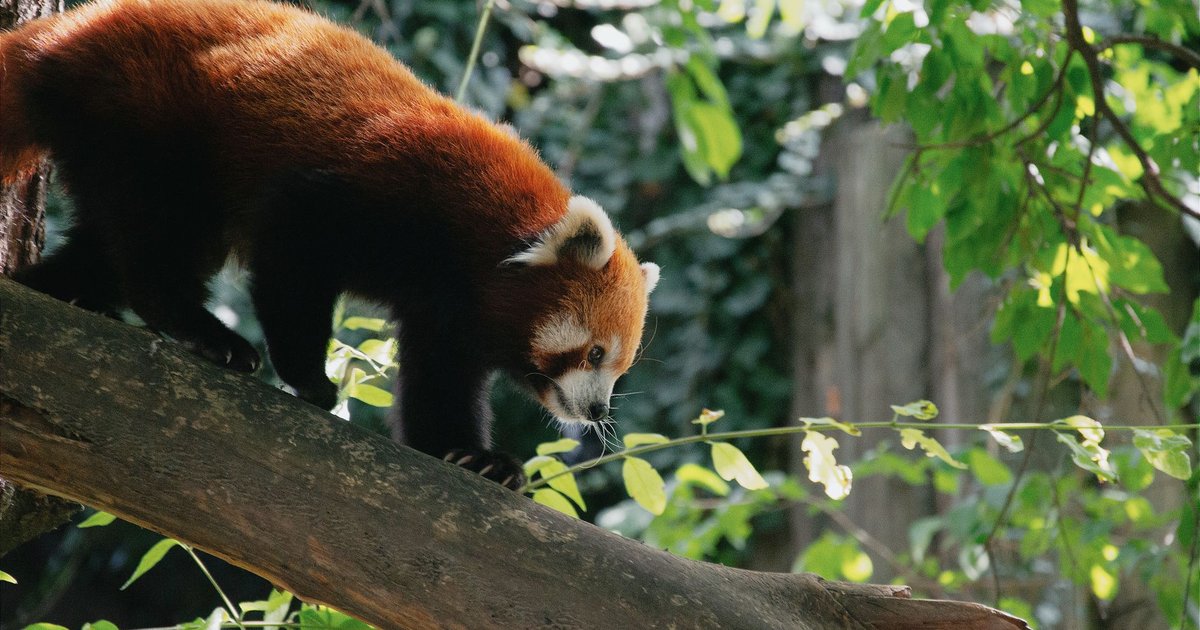
The Red Panda's Unlikely Survival Trick
A red panda's front paw has six digits. Five toes, plus a modified wrist bone that sticks out like a thumb. Every other carnivore on Earth gets five—this one cheated.
It's not magic. The false thumb is a thickened sepal bone, wrapped in a leathery pad, positioned at an angle that lets the paw grip bamboo stalks the way you'd grip a pencil between thumb and fingers. No other mammal in the order Carnivora has anything like it. Giant pandas evolved something similar—also made of bone, also for bamboo—but they're not close relatives to red pandas at all. Two animals, same problem, independently invented nearly the same solution. That's how badly they both needed it.
Red pandas are small. An adult weighs around 3.5 kilograms—lighter than a house cat. They live in the eastern Himalayas and southwestern China, in bamboo forests where the altitude climbs steep and fast. Ninety-five percent of their diet is bamboo. They don't digest it well; a red panda has to eat an enormous volume just to survive. So every waking hour revolves around stripping leaves and stems, climbing through dense thickets, staying wedged in branches where predators can't reach them.
Without that false thumb, a red panda would slip. Bamboo is smooth and cylindrical. Their body evolved to be light and agile—useful for moving through forest canopy, disastrous for gripping thick stalks. The false thumb solved it. Not elegantly. Not with the strength of five toes working in concert. But enough. Enough to let an animal the size of a squirrel depend entirely on a plant its paws can barely hold.
One small bone. The difference between thriving and starving in a bamboo forest.
More from Nature & Animals