Nature & Animals
Why Foxes Hear Mice Under Snow
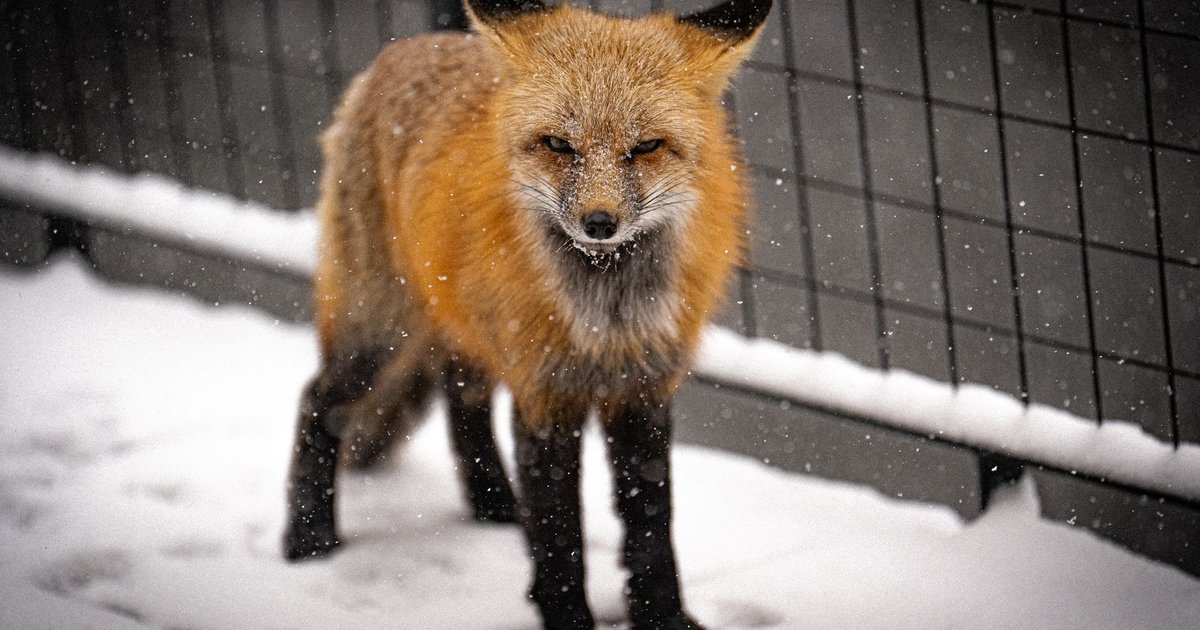
A red fox stands motionless in a snow-covered field, ears swiveled forward at an angle that would look absurd on any other animal. Then it leaps straight up and dives headfirst into the snow. When it resurfaces, a vole is in its mouth.
This isn't luck. Foxes can locate rodents buried nearly a foot underground using sound alone—a feat of acoustic precision that beats most mammals hands down.
The trick lives in their ears. Foxes have asymmetrical ear placement: one ear sits slightly higher on the skull than the other. This tiny difference means sound waves from a rustling mouse reach each ear at a fractionally different time. The fox's brain calculates the delay—we're talking milliseconds—and triangulates the exact location of the prey below.
It's essentially sonar, except the fox didn't produce the sound. It's listening to the mouse's own movements. A vole gnawing on a seed or scratching at frozen soil makes noise. To human ears, it's inaudible. To a fox, it's a dinner bell with coordinates attached.
That asymmetry isn't unique to foxes—owls have it too, and they hunt in darkness using the same principle. But foxes added their own twist: they're accurate enough to hunt in deep snow when visual predators like hawks and eagles are blind. In winter, when food is scarce and competition is brutal, that one acoustic advantage keeps them fed.
A successful dive happens roughly 73 percent of the time, according to field studies. The fox doesn't see the mouse. It doesn't smell it through the snow. It hears it, calculates its position in three dimensions, and strikes with enough precision to catch a creature smaller than a golf ball buried beneath a foot of insulating white. That's not instinct. That's engineering.
More from Nature & Animals