Nature & Animals
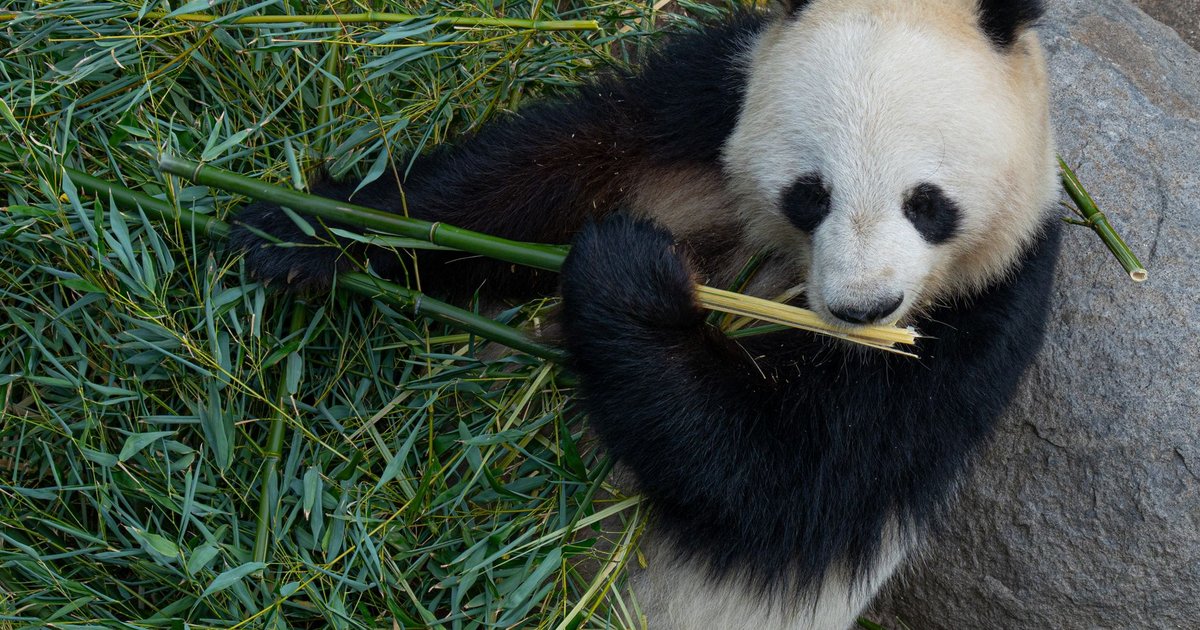
The Panda's Deceptive Grip: Bamboo Expert, Not Brutal
A giant panda's paw looks built for crushing. Six digits per foot, including what looks like a thumb. Yet watch one eat and you're seeing an animal that struggles with basic leverage—spending 12 to 16 hours a day munching bamboo because it has to stuff itself silly just to survive.
The "thumb" isn't a real thumb at all. It's an enlarged wrist bone that evolved from a different bone entirely. This matters because it means the paw can grip a bamboo stalk, but not with anything close to a primate's precision or strength. A panda bites and tears with its jaw—the real workhorse—while the paws mainly hold the plant steady. That cumbersome fake thumb is good enough for bamboo. It's not good enough for much else.
Here's what surprised researchers: giant pandas are weak by the standards of other large carnivores. A bear their size—and pandas are carnivores, descended from meat-eaters—should be formidable. Instead, a 250-pound panda has the bite force of something half that weight. Their ancestors had robust jaws and killing teeth. Pandas lost that over millennia. Bamboo doesn't fight back.
This is why pandas are so vulnerable. They can't hunt effectively. A female gives birth to cubs so tiny and helpless that she has to choose which one to care for when twins arrive—she often abandons one. In the wild, a panda's main enemy isn't a predator. It's starvation. When bamboo forests are cleared or a species of bamboo flowers and dies off (as they do cyclically), pandas starve. They've painted themselves into a corner so narrow they can barely move.
The fake thumb that lets them grip one thing has made them helpless at everything else. Evolution's most famous compromise.
More from Nature & Animals