Nature & Animals
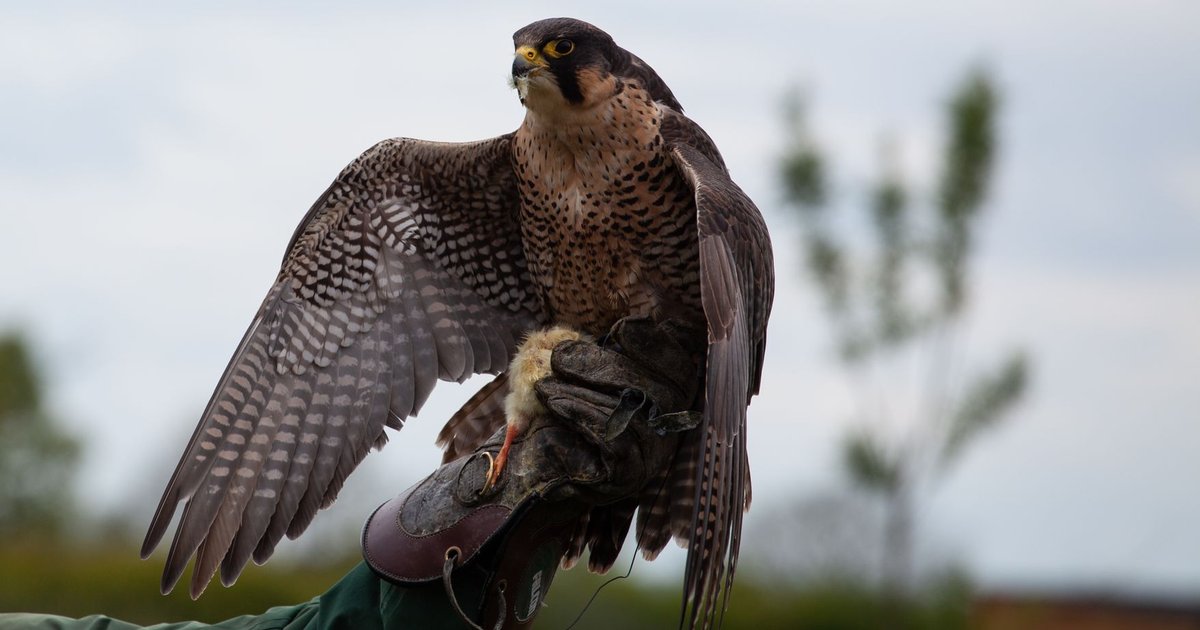
The Peregrine Falcon's Stoop Breaks Every Speed Record
A peregrine falcon folds its wings and drops. In four seconds it crosses the speed of a commercial jet. Two hundred and forty miles per hour. That's the documented top speed during a hunting dive—a maneuver ornithologists call a stoop—and nothing with feathers comes close.
For context: a golden eagle, the other apex flier most people invoke in speed debates, tops out around 150 mph in a dive. A merlin, another fierce falcon, manages maybe 65. The peregrine doesn't just outpace them. It obliterates the category.
What makes this even stranger is the purpose. The bird isn't racing to escape danger. It's pursuing prey—small songbirds and shorebirds in mid-flight. At 240 mph, air pressure alone would crush a mammal. A bird's bone structure is different: hollow, reinforced with internal struts the way an aircraft fuselage is braced. Their nostrils have baffles inside them, like tiny turbine housings, that slow incoming air so the falcon doesn't suffocate mid-dive.
Even their vision adapts. Humans can track something moving at 60 mph before it blurs. Peregrine falcons track prey at four times that speed and adjust their trajectory in real time—a computational feat that happens in the space between wingbeats.
They miss sometimes. Often, even. A pigeon that flares its wings and banks hard at the last second survives. But when a peregrine connects, the impact is instant. The falcon's fist (the talons clenched together) hits like a bullet from a small-caliber rifle. Death arrives too fast to register.
On the ground, a peregrine looks almost ordinary—dark-backed, quick-eyed, maybe a pound at most. Get one in the air, point it at prey, and you're watching the most precisely engineered hunting machine on Earth.
More from Nature & Animals