Nature & Animals
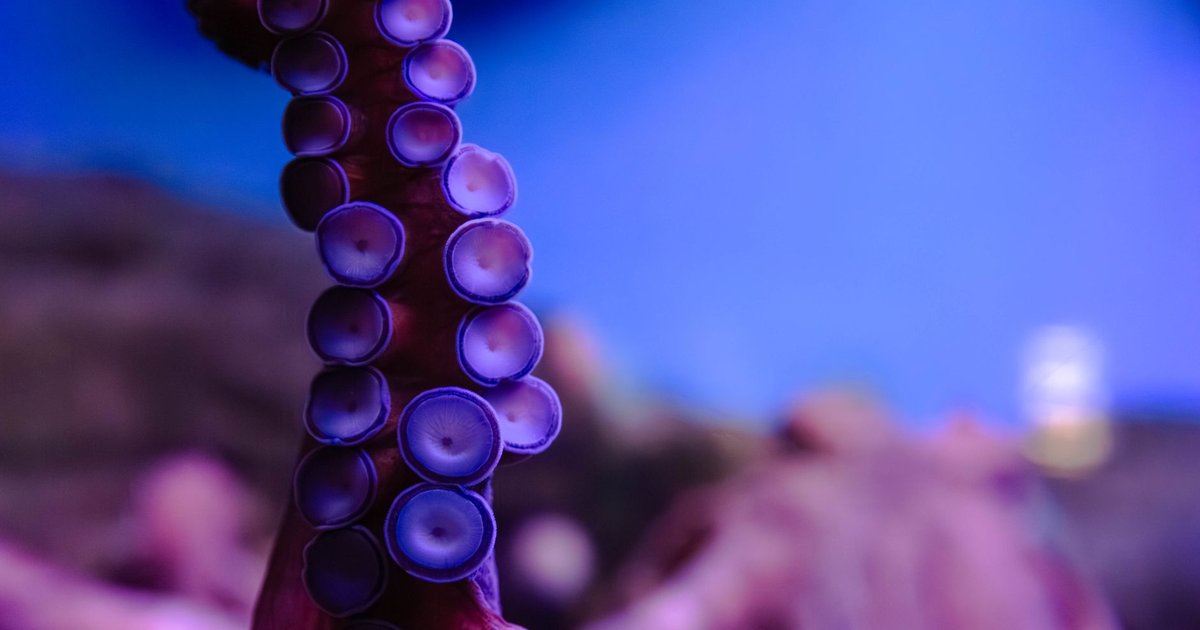
The Octopus Can Taste With Its Arms
An octopus has nine brains. Eight of them live in its arms.
Each arm contains roughly 350 million neurons — about two-thirds of the octopus's total neural tissue. That means an arm can taste, touch, and solve problems entirely on its own, without waiting for permission from the central brain in the head. If an arm encounters something edible, it doesn't need to consult headquarters. It just eats.
This distributed intelligence lets an octopus do something no other animal can: problem-solve with multiple limbs simultaneously, each one working semi-independently. One arm might be unscrewing a jar lid while another tastes the seafloor and a third reaches into a crevice. They're not being remotely piloted from above like a video game character. They're more like eight semiautonomous workers taking orders from a coordinator who trusts them to figure out the details.
The catch is obvious: an arm that can think for itself is also an arm that can argue with the brain. Octopuses frequently seem to be in a minor conflict with themselves, arms pulling in different directions, one tentacle trying to steal food from another. It's not injury or malfunction — it's what happens when you have eight reasonably intelligent limbs that don't always agree.
This is why an octopus can survive the loss of an arm without much fuss. Regrow it, and the new arm needs almost no retraining. The neural hardware is already there. The arm already knows what it's supposed to do.
For such a strange animal, the octopus didn't evolve its nine-brain system as an exotic flourish. It's ruthlessly practical: independence, redundancy, and speed. An arm that waits for the brain to think is an arm that loses its meal.
More from Nature & Animals