Nature & Animals
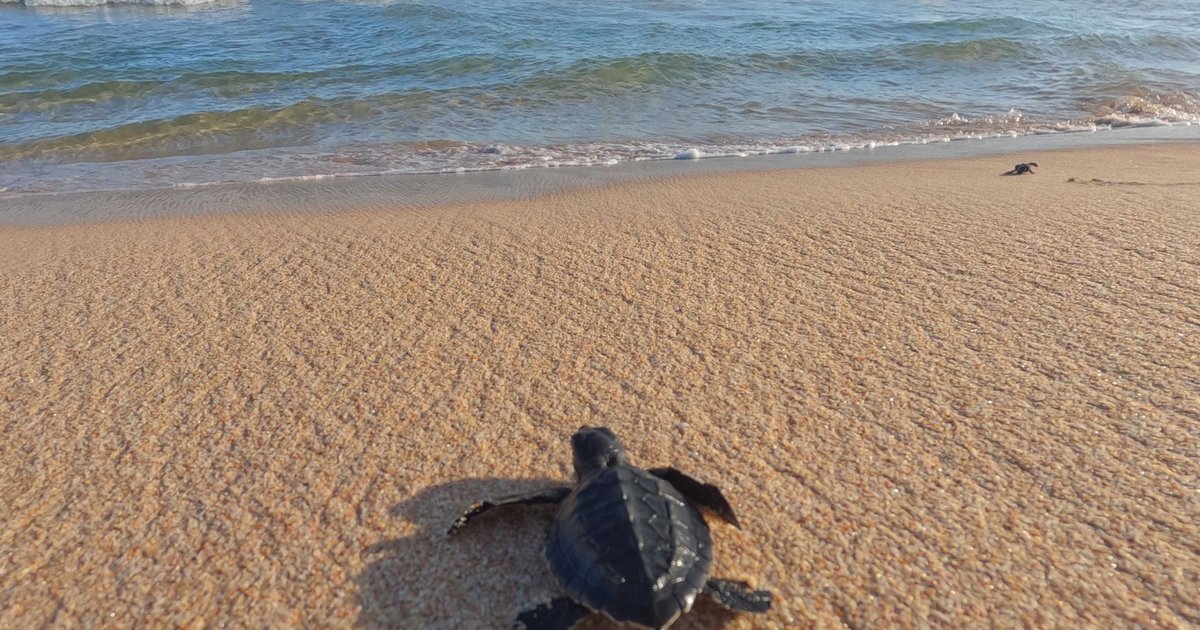
Sea Turtles Navigate Thousands of Miles With a Brain the Size of a Marble
A loggerhead sea turtle hatched on a Florida beach in 1987 swam out into the Atlantic and didn't return for 50 years. When it did, it came back to nest on the same stretch of sand where it was born. No GPS. No landmarks to follow once it left sight of shore. Just magnetism.
Sea turtles sense Earth's magnetic field the way you sense gravity — it's automatic, invisible, absolute. The route imprints on them as hatchlings: they memorize the angle and intensity of the field at their birth beach, then carry that magnetic signature in their nervous system across entire ocean basins. A turtle nesting in Costa Rica can cross to feeding grounds off West Africa, stay there for years, then navigate back across 5,000 miles of open water to the same beach.
The brain doing this weighs roughly as much as a large marble. It has no neocortex, no cerebral folds, none of the architecture we associate with intelligence. Yet it executes a navigation problem that would stump most GPS algorithms if the satellites failed.
How they encode and store the magnetic map remains unsolved. Researchers have found magnetite crystals in sea turtle neurons — iron deposits that could theoretically act as tiny compasses — but the actual mechanics of how a turtle "reads" these crystals and translates them into directional behavior is still largely mystery.
What we know: a female loggerhead can be intercepted and relocated 1,000 miles away, and if released back into the ocean, she'll correct course and aim herself toward her original nesting beach. Not toward the nearest suitable beach. Toward the one imprinted on her when she was the size of a coin.
Decades underwater. No map. No memory that's anything like ours. Just a marble-sized brain tuned to a magnetic frequency we're only beginning to understand.
More from Nature & Animals