Nature & Animals
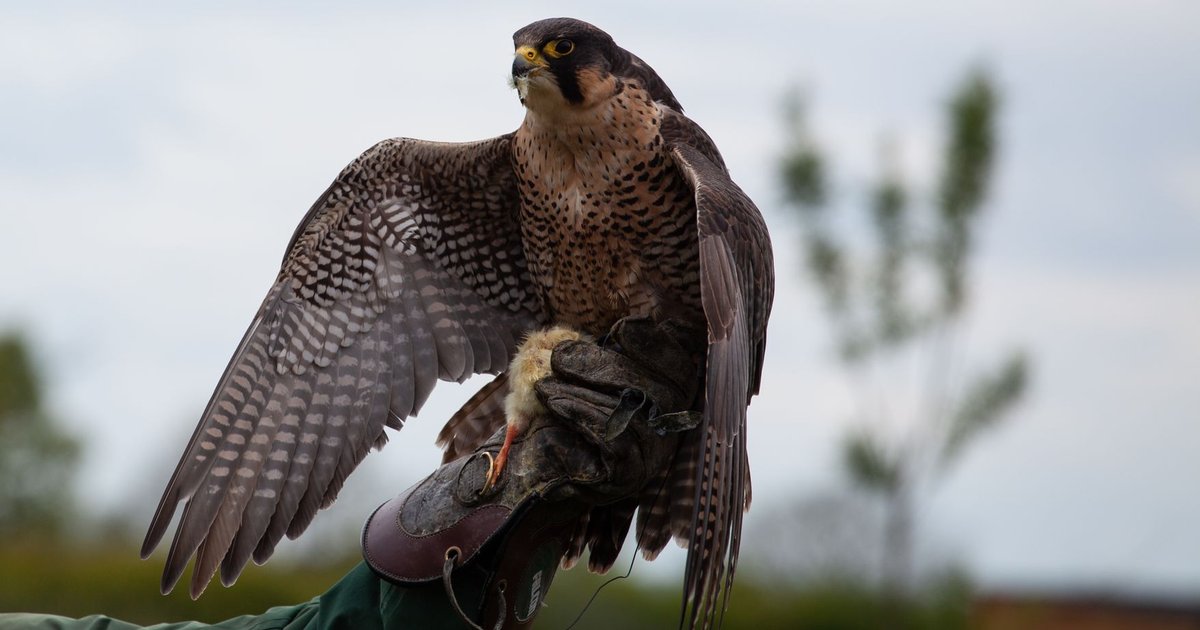
Peregrine Falcon's Dive Breaks Every Speed Record
240 miles per hour. That's the speed a peregrine falcon hits when it folds its wings and drops toward prey.
Nothing else comes close. A greyhound tops out around 45 mph. A cheetah, 70. The fastest fish, a sailfish, manages maybe 68. The peregrine doesn't belong in the same category—it operates in a physics entirely its own.
What makes the number real is how it happens. A falcon hunts pigeons and smaller birds in mid-air. It climbs above them, folds its pointed wings into a teardrop, and gravity does the work. Air resistance barely slows it down because the bird's body is the opposite of a parachute—a living dart. By the time the falcon reaches its target, the prey has no chance to dodge. The strike takes maybe a second.
Scientists measured this by watching footage frame by frame, then confirming the math with wind-tunnel tests on falcon models. A 2005 study clocked a wild peregrine at 242 mph, which stands as the fastest speed ever recorded for any animal in horizontal motion.
The speed has a cost built in. Diving that fast, a falcon's eyes can't focus. Its brain overrides the problem: it aims at where its prey will be, not where it sees it. No blink, no hesitation. Muscle memory learned over generations.
Even the anatomy bends toward speed. Falcon nostrils have baffles that slow incoming air so it doesn't flood the lungs and burst them. The heart can handle the G-forces. Most animals couldn't survive a dive like that—the peregrine was engineered, over millions of years, to be a bullet.
In a world of speed records, the peregrine doesn't just win. It laps the competition.
More from Nature & Animals